

Maker Spotlight: RachaelPots Studio

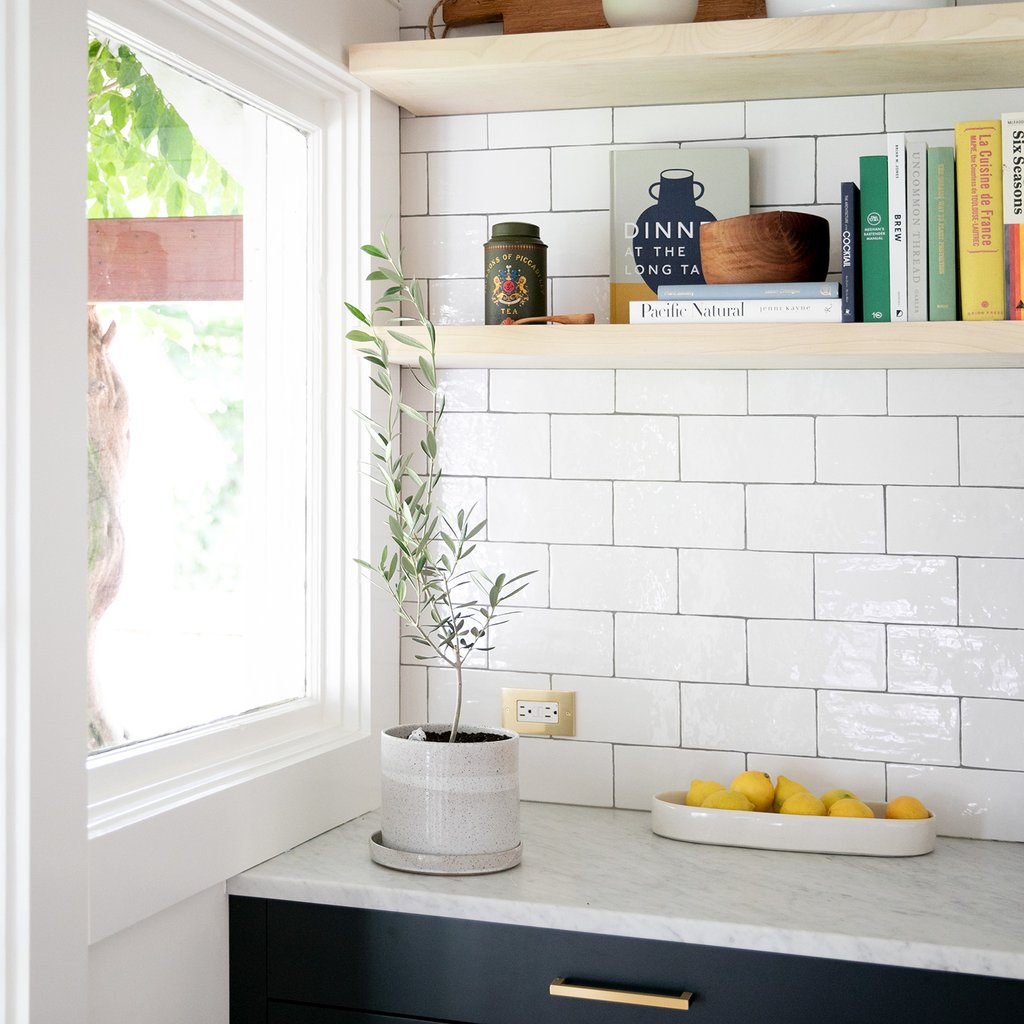
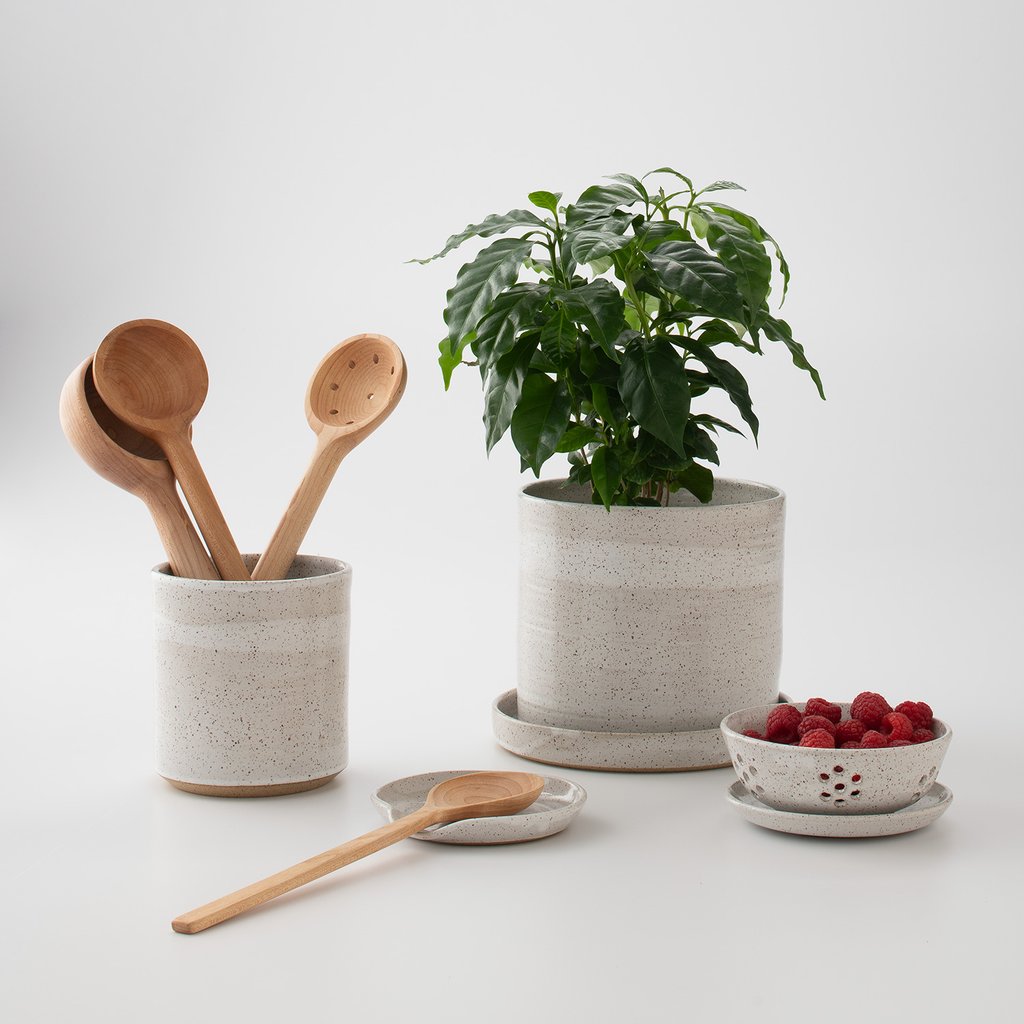
There’s nothing that brings joy like a well-designed product that is both incredibly useful and beautifully made. But creating an object that touches on both function and form is no small task. Lucky for us, Rachael Scharf has spent years doing just that. Dedicated to designing objects that are both lovely to look at and functional, Rachael is a Brooklyn-based potter and the talented maker behind our Speckled Stoneware collection, opens in a new tab. By exploring the relationship between people and domestic utility, her goal is to create practical and beautiful objects for the home that can be enjoyed for years to come. We caught up with Rachael to learn more about her story and the laborious but rewarding process behind her work.
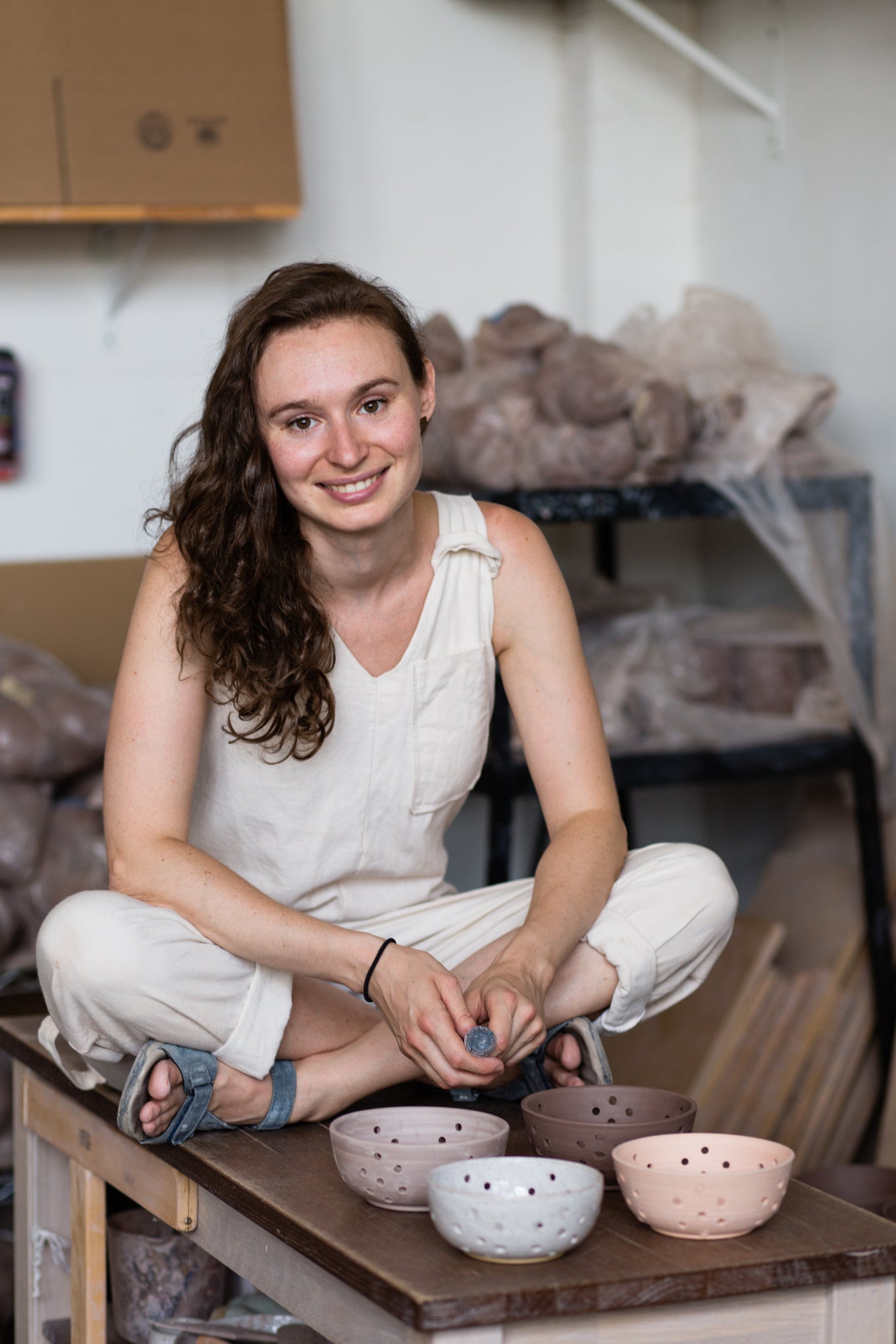
Tell us a bit about your background – when did you begin studying ceramics? Have you always been drawn to your craft?
"Clay has always been a part of my life. In grade school, clay starred in my homework projects and sculpting small figurines took up much of my time at home. I took a few ceramic classes in high school and college, but it was not until after college that I was introduced to the potter’s wheel. While living in Washington, D.C. I came across a weekly throwing class. I immediately fell in love with the practice. In ceramics, I could see and feel progress with the material in a way that was immensely satisfying to me.
After two and a half years of working on my technique in D.C., I decided I needed a more formal and rigorous setting to continue my throwing journey. I was accepted into a yearlong Post-Baccalaureate program at SACI in Florence, Italy, where I was able to focus on throwing and form. Even after I returned to New York, I spent my summers abroad. I became a studio assistant at La Meridiana, an international ceramics school in Tuscany. I worked there for three summers, assisting ceramicists from all over the world and began fine tuning my technique."
via @modestmarc , opens in a new tab
How did your time in Italy shape your work?
"Quitting my job to focus full-time on ceramics gave me time for creative freedom and exploration. I was constantly surrounded by renaissance masters from the past. The clay we used was locally sourced from a nearby town in Tuscany – the same clay that ceramic artists have been using for centuries. Learning to work within the confines of the material gave structure to my creative process. I focused on the idea of a vessel holding liquid and the influence of gravity on the curve of a pot."
What does your creative process look like from start to finish?
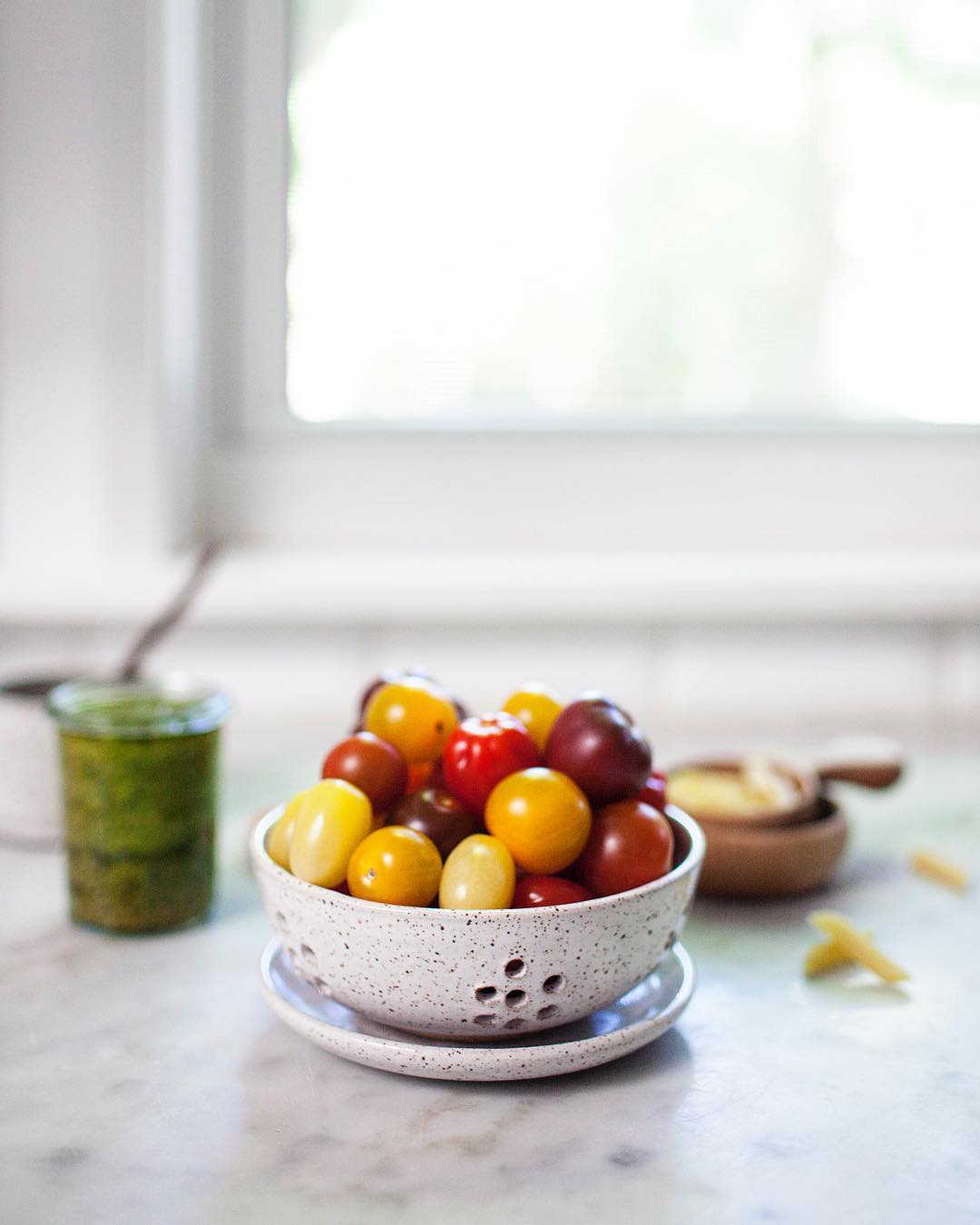
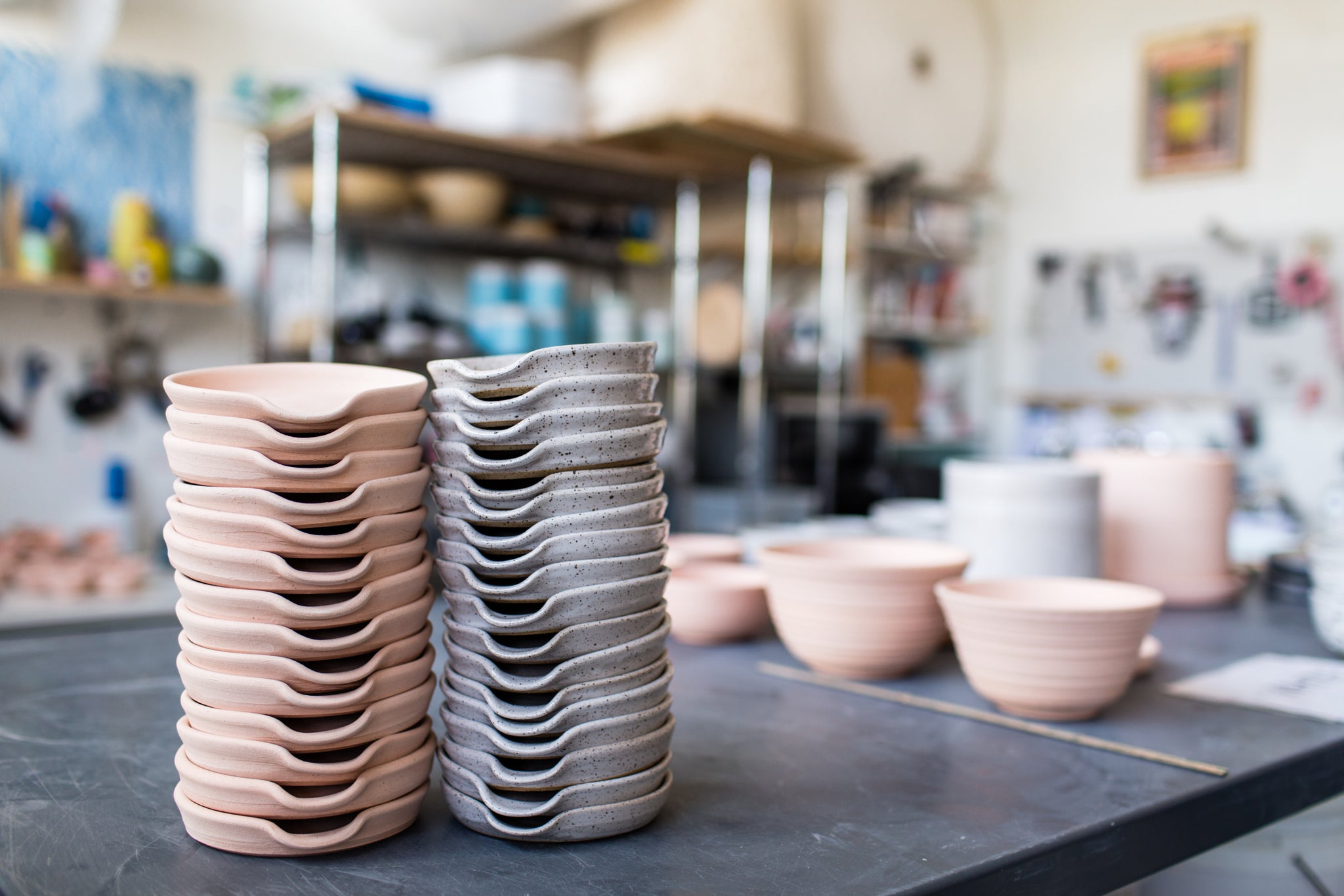
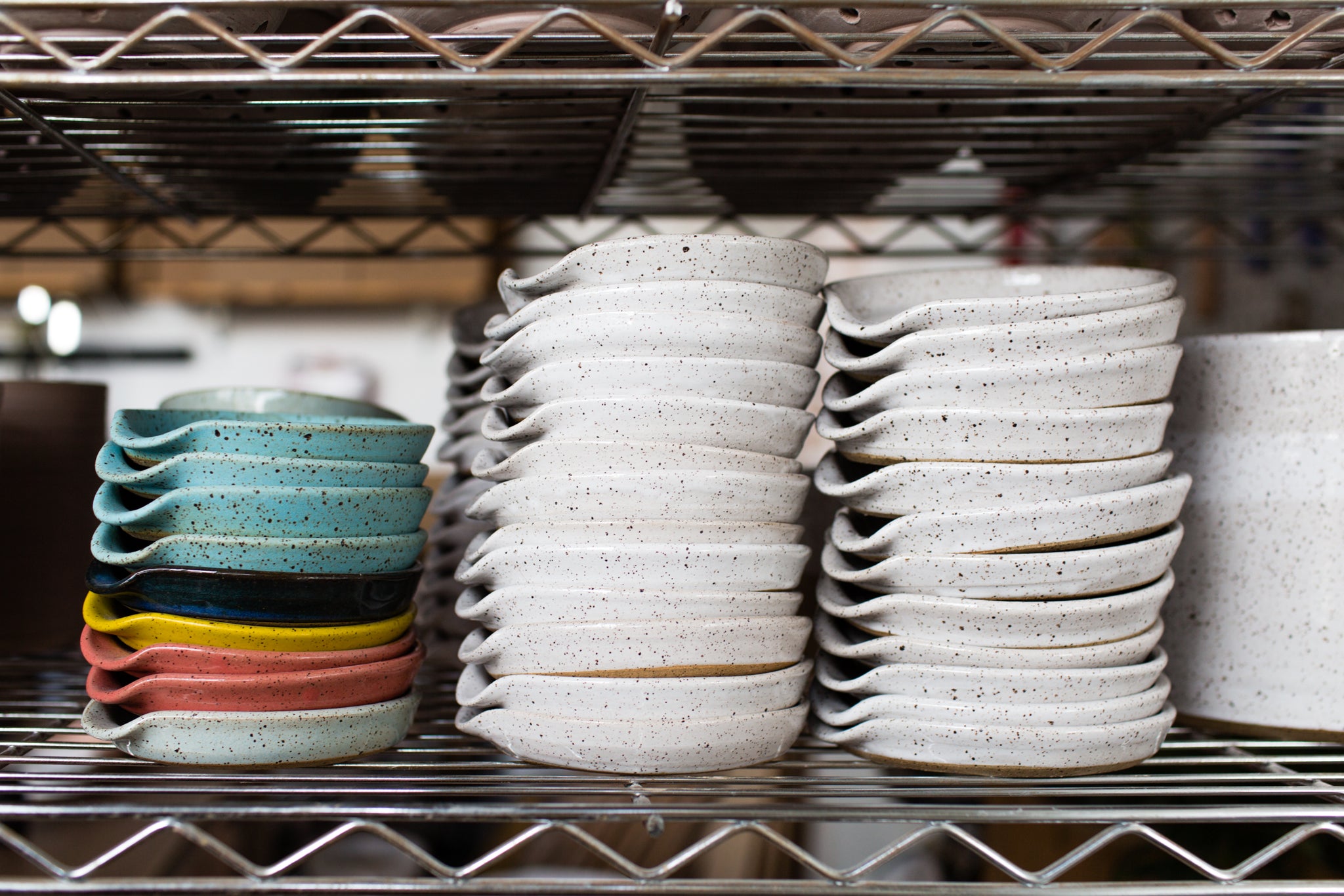
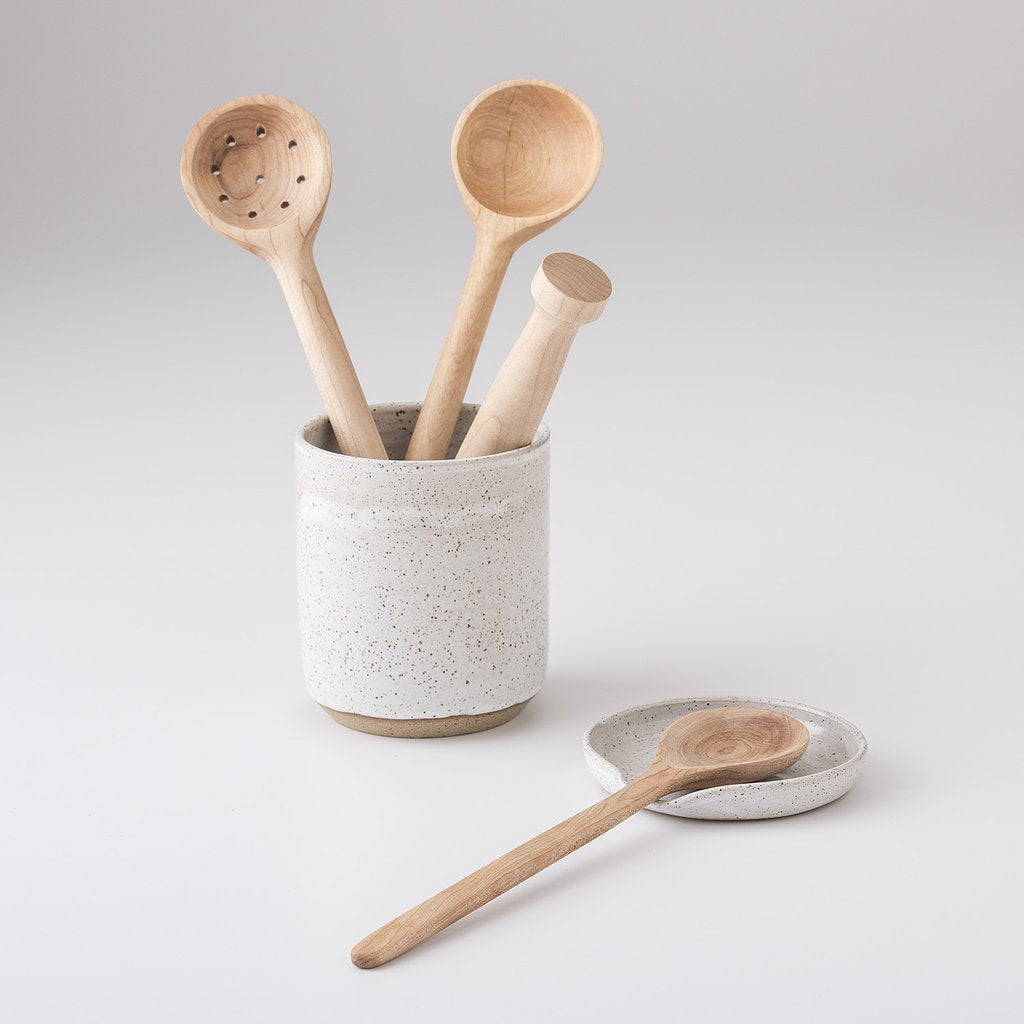
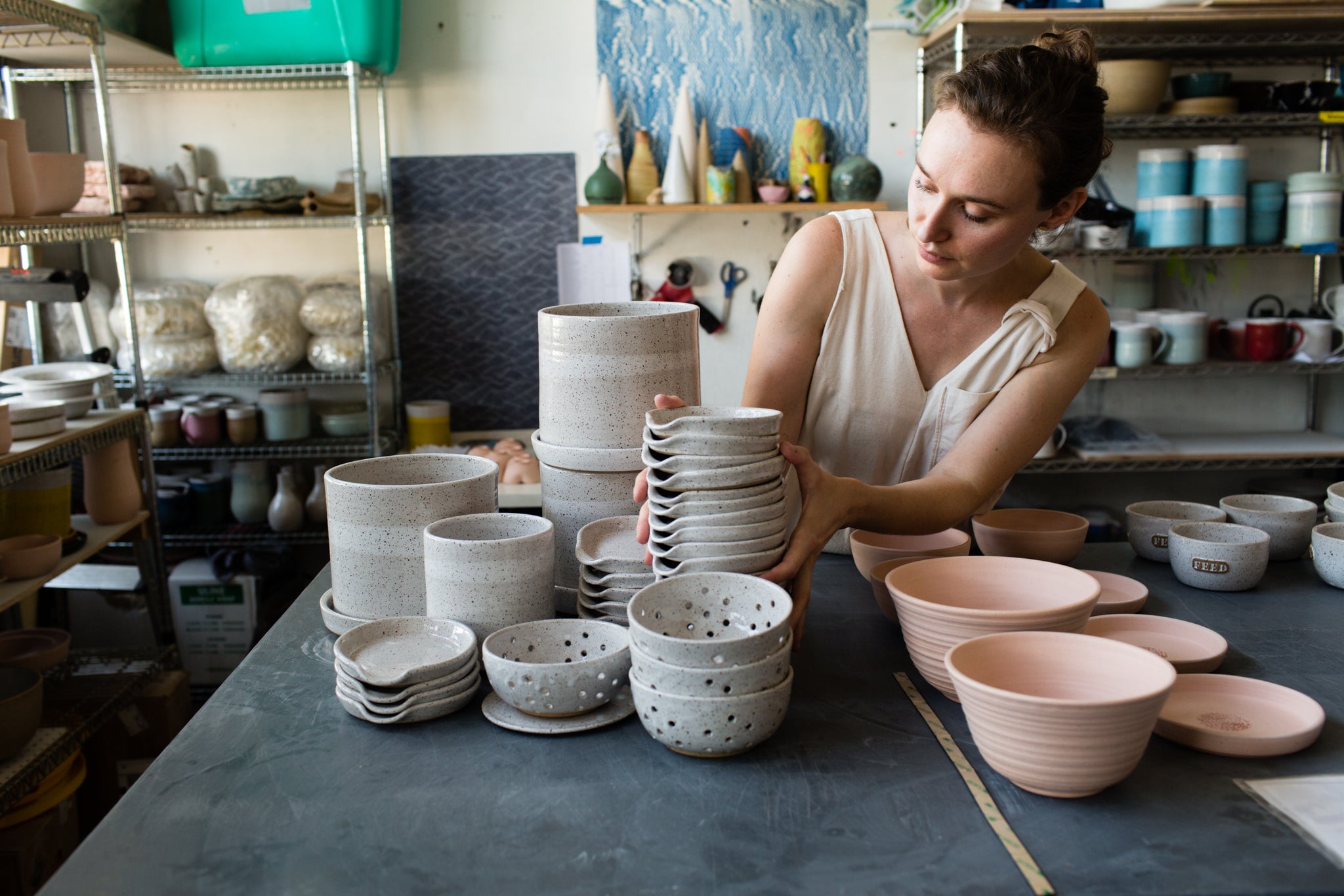
"My ceramic line comes from functional necessity. I start with an idea for an object that can facilitate a specific need in the kitchen or home. For example, the Speckled Spoon Rest, opens in a new tab has gone through many iterations. I have changed the diameter, the height of the wall, and the width of the lip to best fit the space between physical beauty and functional perfection. Is the object large enough for both big and small spoons? Does it fit between the burners of a standard stove? Is this everyday object unobtrusive but also simple and balanced to look at? These are the kinds of questions I ask as I alter the shape and size.
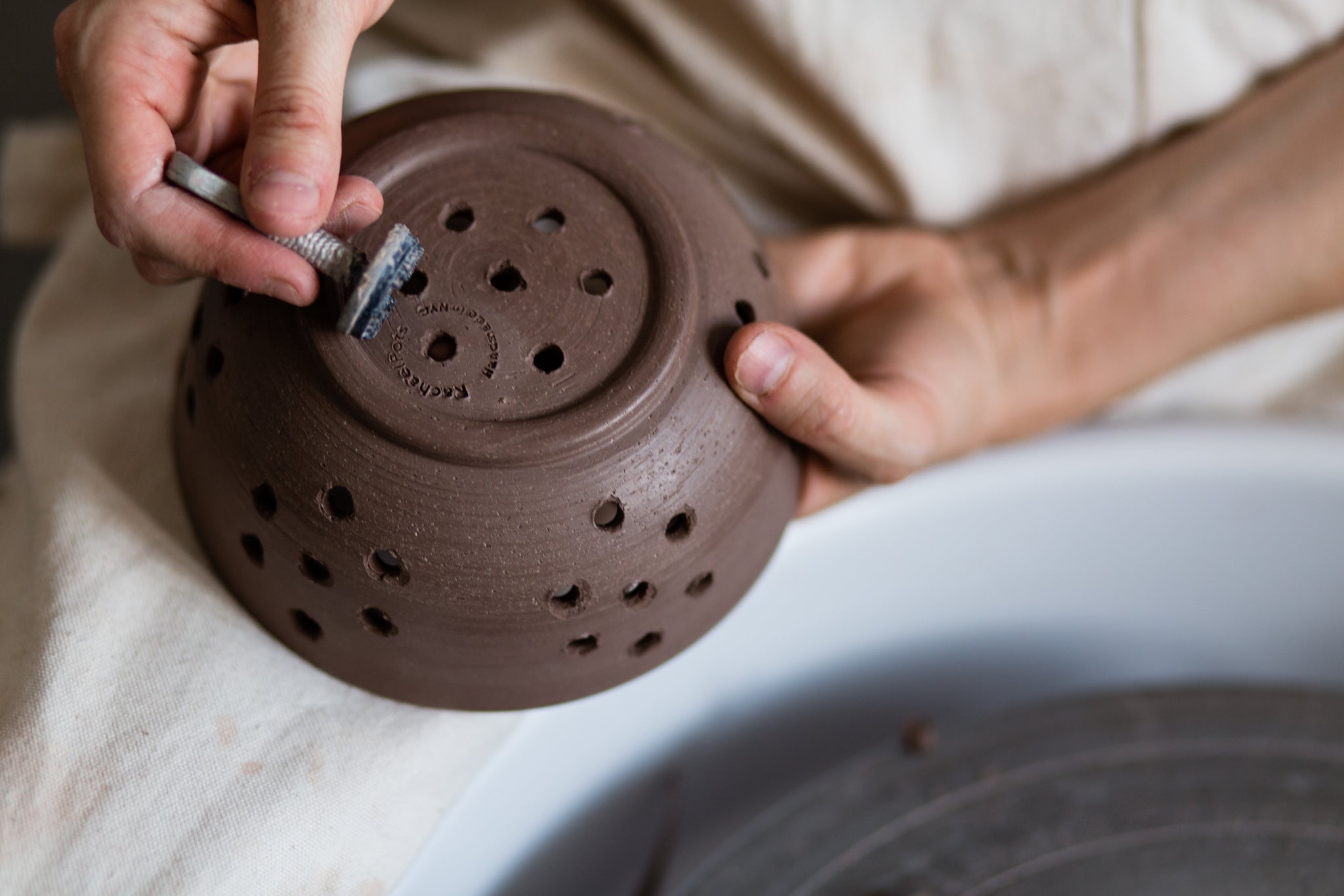
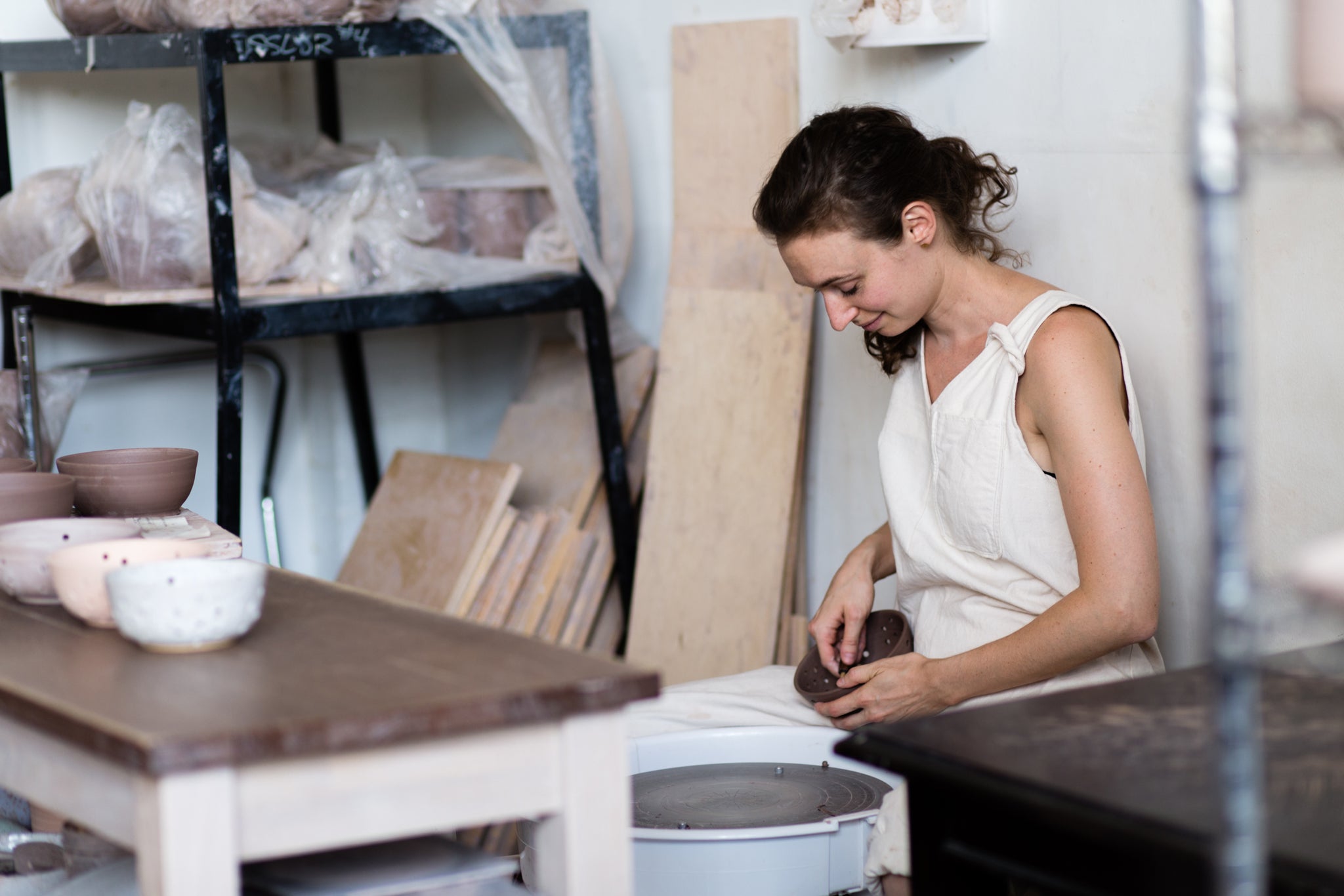
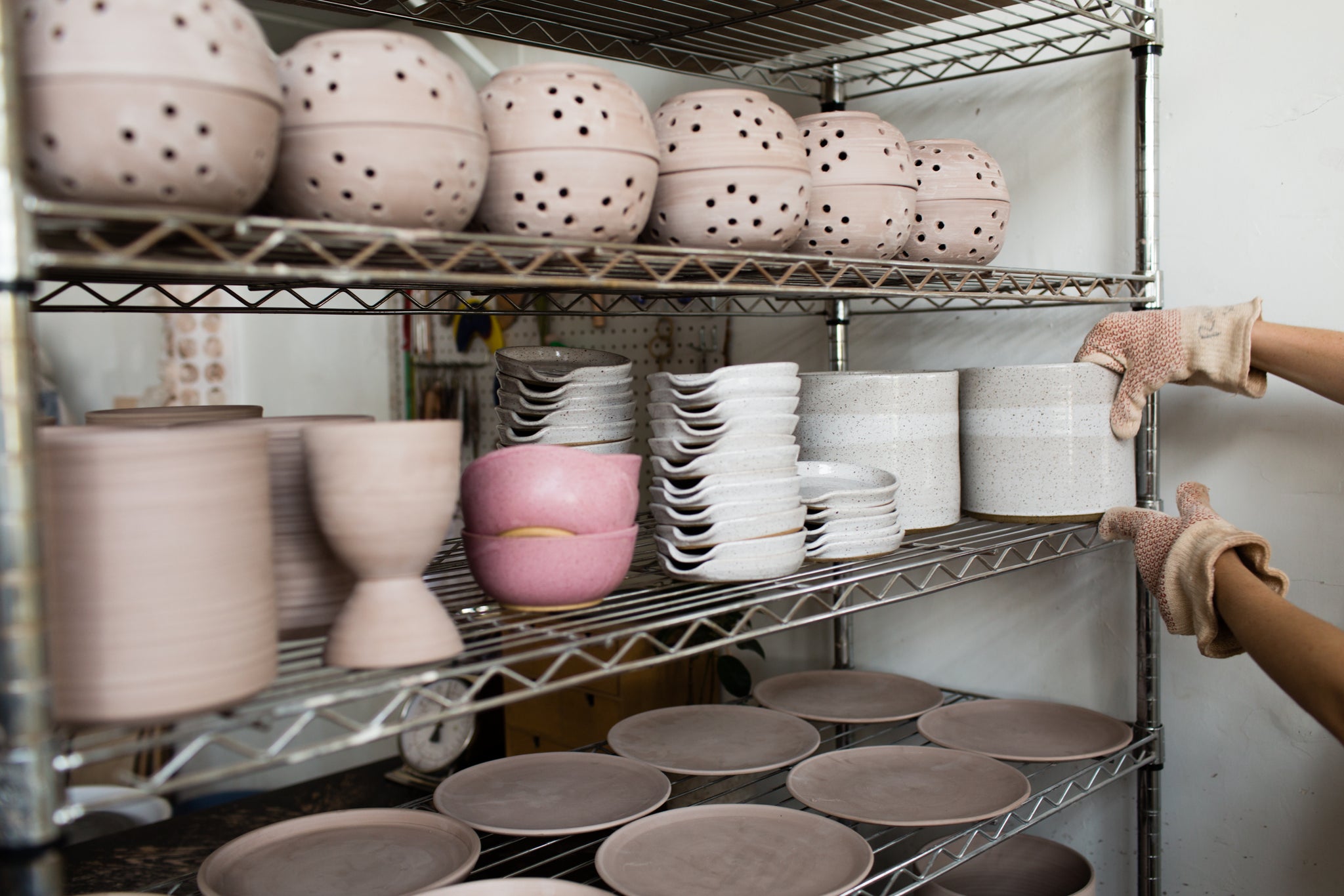
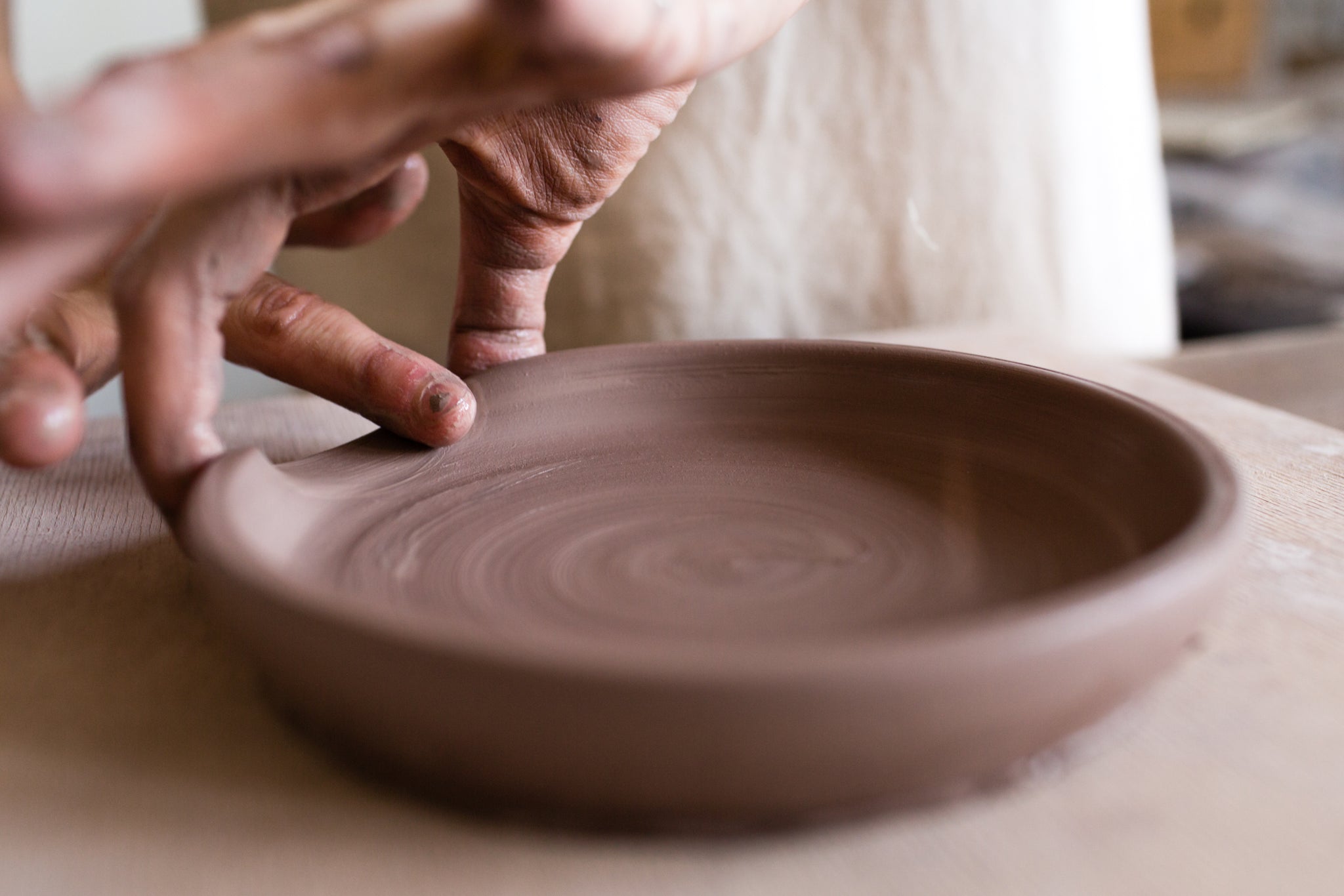
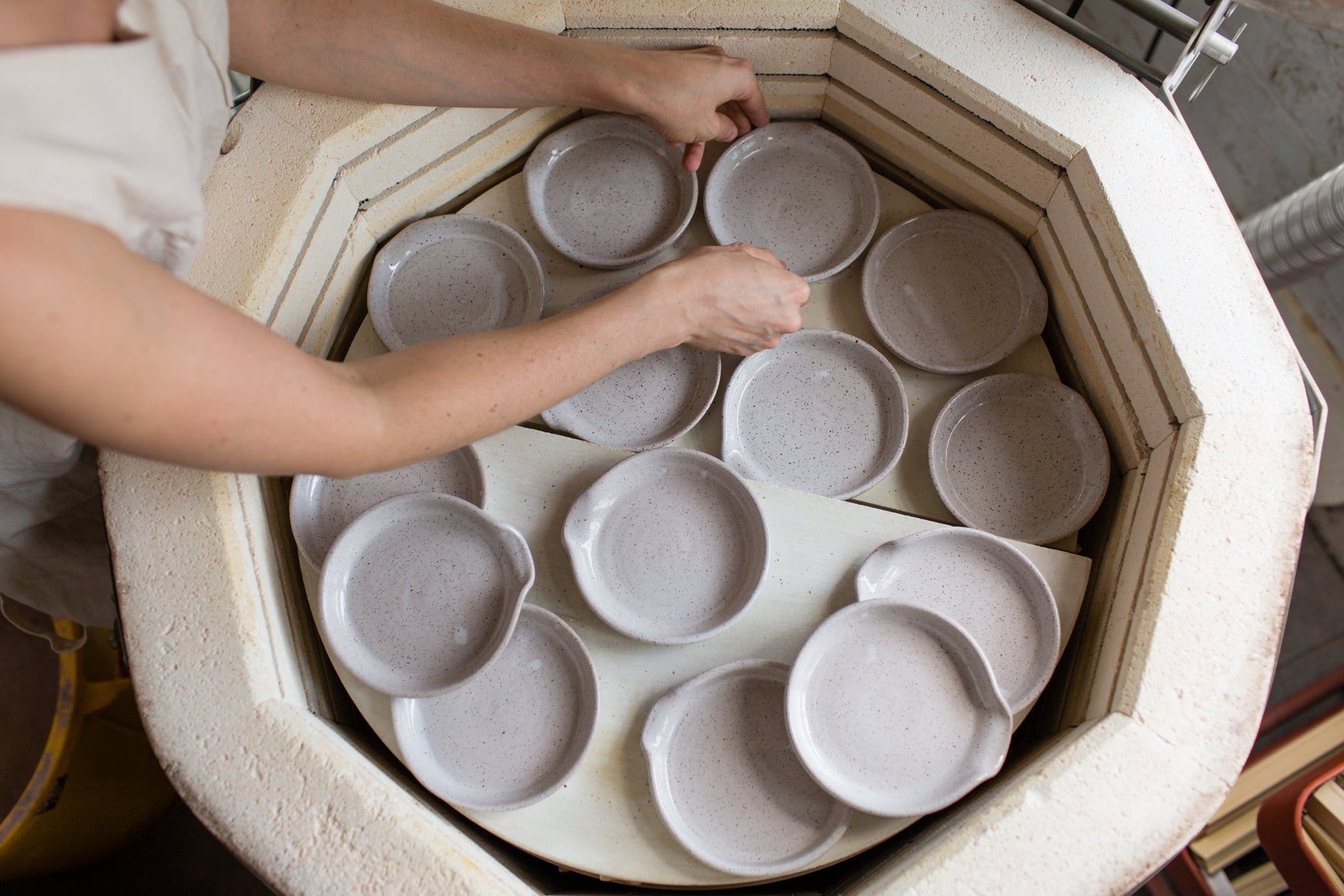
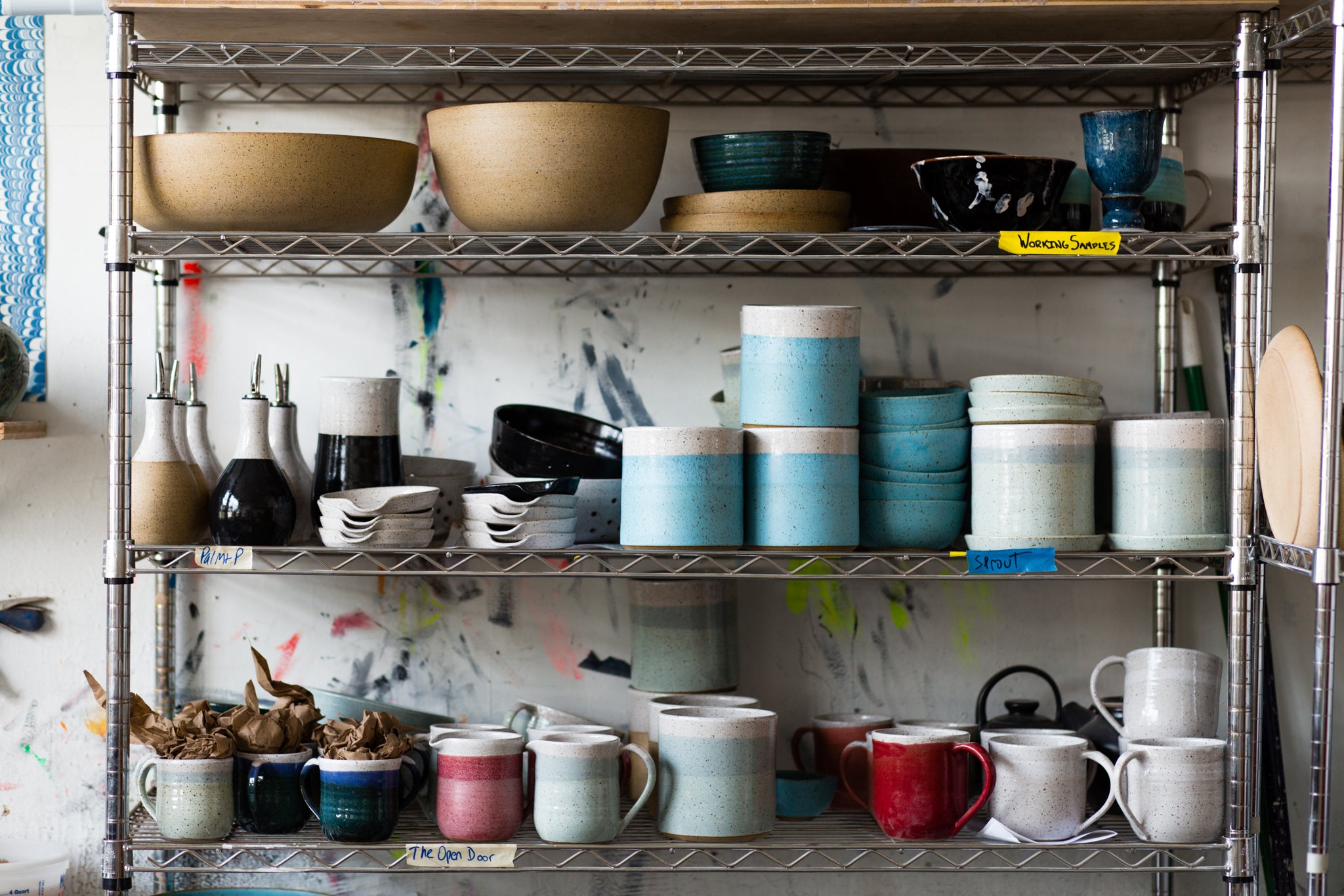
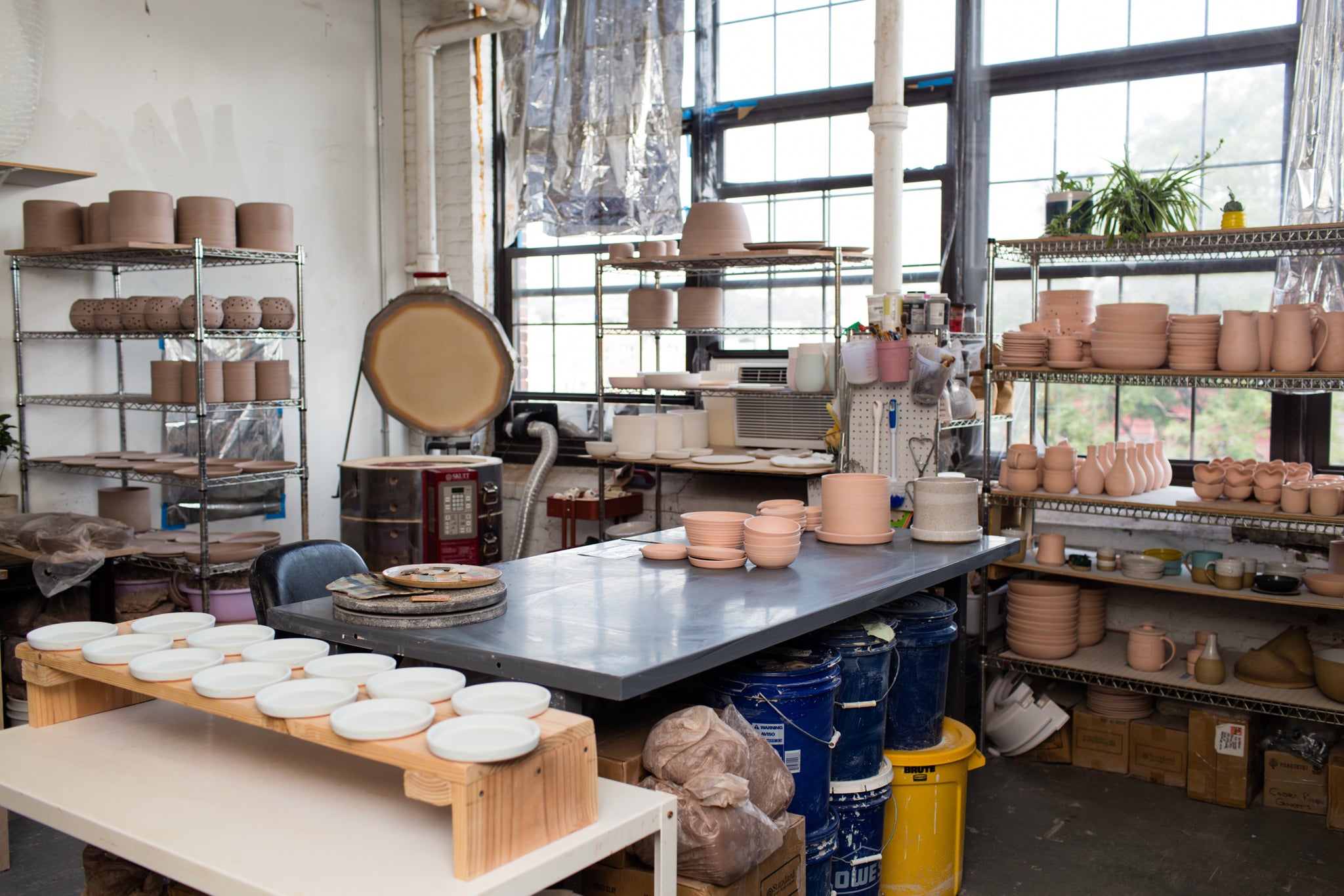
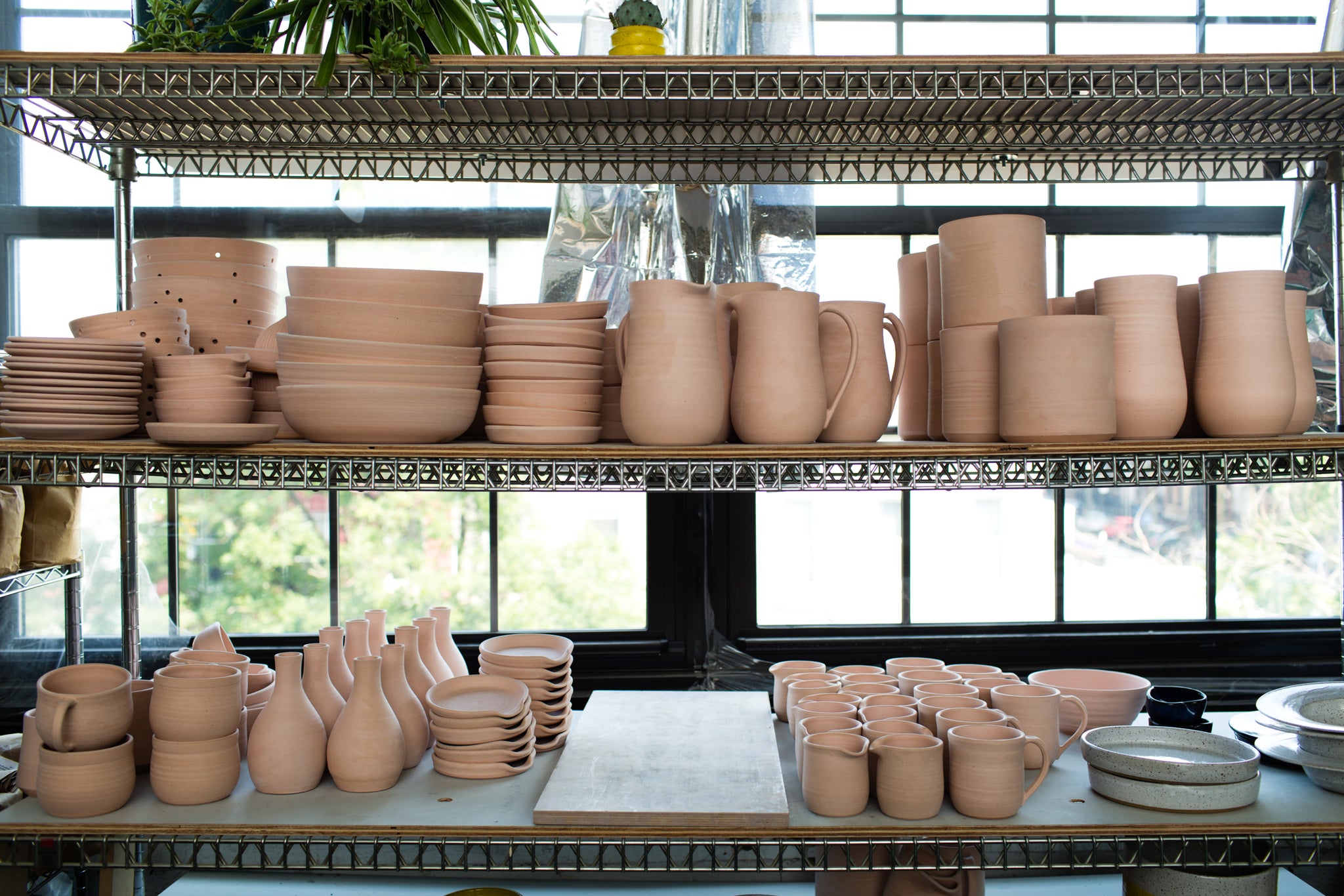
The life of a piece starts with a piece of clay that is weighed and then shaped into a ball. The ball is then thrown into a form on the wheel. Some pieces (the spouts of the Spoon Rests for example) get altered immediately after throwing – while the clay is still wet. The clay is then left to dry halfway, to the 'leather hard stage.' At this point, the bottom is trimmed and stamped. After becoming completely bone dry, the pieces are loaded into the kiln for a bisque firing. Once they are cool from the bisque, the pieces are dipped in buckets of liquid glaze and loaded back into the kiln for the glaze firing. After being cooled and unloaded, the bottoms of the pieces are sanded and shipped out to their new homes."
How did your company get started?
"After moving back from Italy, I started teaching in a ceramics studio in New York City. Once I spent some time getting to know the clay and glazes the NYC area had to offer, I began working on forming a ceramic collection. I spent years doing the NYC craft fair circuit. Interacting with customers and listening to people’s opinions helped me shape my line. When I felt I had a cohesive collection of pots, I switched over to the NYNOW wholesale show. This August will mark my 3rd year in the wholesale world. I currently do a few winter retail craft shows in NYC to maintain a connection with my customers and try out new shapes."
Who are some of your creative influences?
"I've always been drawn to the clean lines of Brancusi and his ability to change hard materials into soft visual objects. Keith Haring has also felt significant to my own expression of ideas. His use of bright colors and negative space convey his messages well."
What’s it like to be a maker in New York? Is there a strong community of artists or is it defined more by independent artisans?
"I've always felt the ceramic community to be very strong here. There's an openness regarding technique and material sharing that feels special to this medium. I find I grow the most while spending time with other ceramic artists. I also spend a few days a week teaching wheel throwing to stay involved. The ceramic community in New York has been growing fast recently. As a native New Yorker, it has been fascinating to watch new community studios pop up!"
What’s the most difficult aspect of owning your own business and working as a creative professional?
"Wearing both the creative and business hat has been the most challenging for me. While the creative side feels natural, the business side of things has been a learning experience. With that said, time management is and will always be a struggle for me. Time and schedule are intrinsically intertwined with the ceramic practice. Drying, kiln firing and cooling, all have to be timed out. I've had to learn that spending time on the business-side of clay is just as important as making the pieces themselves."
What are some projects on the horizon for you?
"I'm currently working on two new and exciting projects! I have teamed up with Clover Hill, opens in a new tab, a new restaurant in Brooklyn, to create all of their dinnerware service. I am also collaborating on a candle vessel with FEED, opens in a new tab, a company that provides meals to children in need around the world."
Photography by Cory Antiel, opens in a new tab & Jack Wineinger, opens in a new tab